


I’ve been saying this for a few months now, but it’s time to put it into writing.
You shouldn’t try to fix every vulnerability that gets discovered in your environment.
I know you’re probably confused, maybe even a little angry, that I just said the not-so-obvious thing out loud. To really stoke the fire, I’m going to take it further.
Fixing vulnerabilities is not the problem (or the solution) that you should be trying to solve!
The real goal is harder, and a lot broader.
You should be continuously reducing risk in your environment holistically.

This Ad Space Is Unsponsored. That’s a Problem We Can Fix Together.
Congratulations. You just read an ad, which means ads here work. Normally a sharp security company rents this spot. This week nobody did, so I’m pitching the best product I know: you. Well, you plus 6,000+ other security pros, founders, and investors who actually open their email (roughly a third of them, which in cyber marketing is basically a miracle). No booth. No badge scans. No lukewarm conference coffee. Just your logo, right here, looking smarter by association. Slots are limited because I refuse to turn this thing into a coupon book.
Exploit Volume Creates Fear and Drives Purchases
The advent of AI driven offensive security capabilities has resulted in a record number of monthly discovered vulnerabilities (CVEs) and the security world is nervous. Vendor marketing teams are pushing “vulnpocalypse” and “Black October” messaging, and the mainstream media has picked it up.
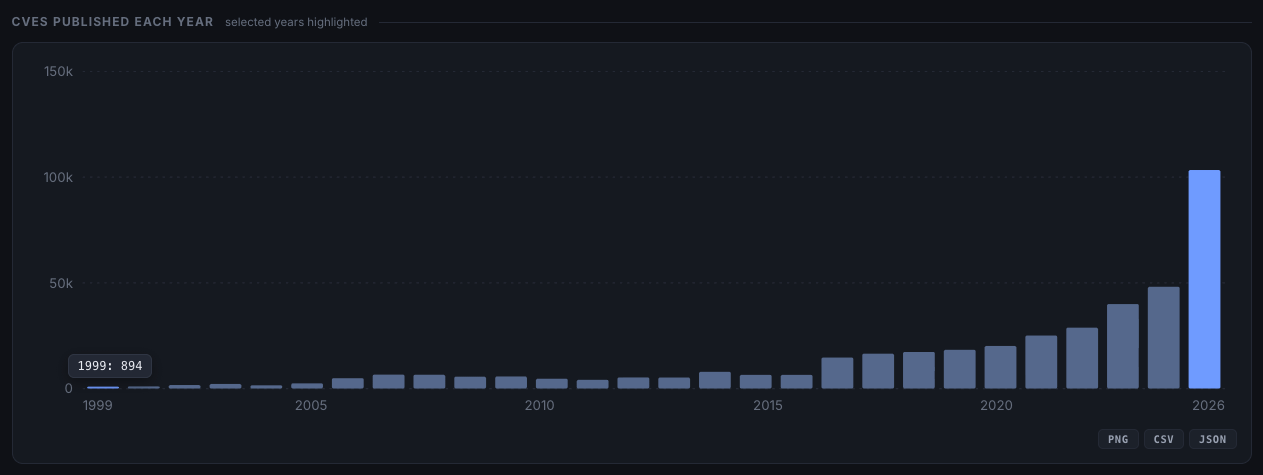
The volume of issues is real. It’s become easier than ever before to find vulnerabilities and to some degree (debatable) weaponize them into full blown exploits. But there’s very little evidence that the flood of newly discovered vulnerabilities is turning into breaches. In fact, there’s real evidence it’s NOT adding much risk to enterprises at all.
According to an article written on July 28th 2026, by Patrick Garrity from VulnCheck, the impact of AI on the state of exploitation in the first half of 2026 has been minimal. Yes, the median time from CVE publication to KEV (active exploitation) fell from 120 days in 2025 to 80 days in H1 2026, so the bugs that do get weaponized are getting weaponized faster. But of the 1,061 vulnerabilities attributed to AI-assisted discovery, only 14 (1.3%) have been confirmed as being exploited in the wild. And finally, Anthropic reported over 23,000 findings via Project Glasswing, while only 126 of those have been given a CVE and only ONE is known to have been actively exploited.
(NOTE: Recently updated data shows 442 CVEs and 2 exploited as of November 9 2026.)
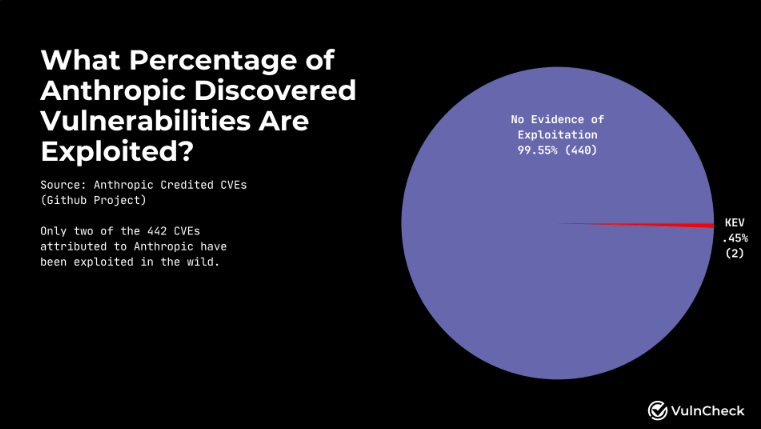
The net results is that AI is flooding the zone with vulnerabilities but attackers aren’t biting.
It’s hard to say with any accuracy why exploitation hasn’t followed the discovery curve. Maybe code-level vulnerabilities just aren’t where attackers want to spend their time. Or maybe attackers just don’t need to bother when easier attack paths still work. Whatever the “why,” it’s pretty clear that security researchers are finding the bulk of the new vulnerabilities with AI, and attackers just don’t give a hoot!
Patch Patch Patch EVERYTHING!
Stop staring at the vulnerability count and racing to clear the list. The people screaming “patch, patch, patch everything or die!” are sending you on a fool’s errand. Patching every CVE at scale was never realistic. In the AI era, it’s a fantasy.
So how did “patch everything” become the expectation? I think it traces back to our industry’s rock-star history. For the better part of three decades, finding vulnerabilities and novel attack vectors was the glamorous side of security. Finding bugs and exploiting them is where this whole game started. Researchers found zero day in code and published it on mailing lists for fame a fortune. Defenders had to patch the issue because there were no mitigating controls available to save them.
Then vulnerability management and AppSec vendors sold us a new idea, fix every zero-day and patch every flaw, and you reach security nirvana. Track every asset, cross-reference every new CVE against it, then build and deploy patches that fix each issue at the root cause.
That message rewarded vendors for surfacing an ever-growing pile of issues, because more findings meant more spend. The industry optimized for finding vulnerabilities instead of reducing risk, because finding sold more product. The cybersecurity equivalent of prefabricated boy bands took over from the real rockstars turning security vulnerability discovery into pop music mayhem.
CVEs at Scale and the Impact of AI
Uh oh. Then someone decided to move the goalposts. AI sent the number of discovered vulnerabilities to the moon and broke the patch-everything model we’d treated as sacred.
As vulnerability counts surged on the back of AI research and automated code analysis, it became obvious that root-cause remediation can’t keep up. For it to keep pace, we’d need serious threat modeling, better secure coding practices, and AI that actually writes secure code. We can’t secure the flood of AI-generated code after the fact. It’ll never work!
AI found too many issues, too fast. Discovery now moves at a pace every downstream security function is scrambling to match.
Patching Isn’t the Goal. Risk Reduction Is.
Security leaders need to accept that patching is one way to reduce risk, not the only way. The goal is NOT to eliminate issues one ticket at a time. It’s to lower risk by reducing the probability of an attack, the impact of a breach on the business, or both. Remember: risk = probability × impact.
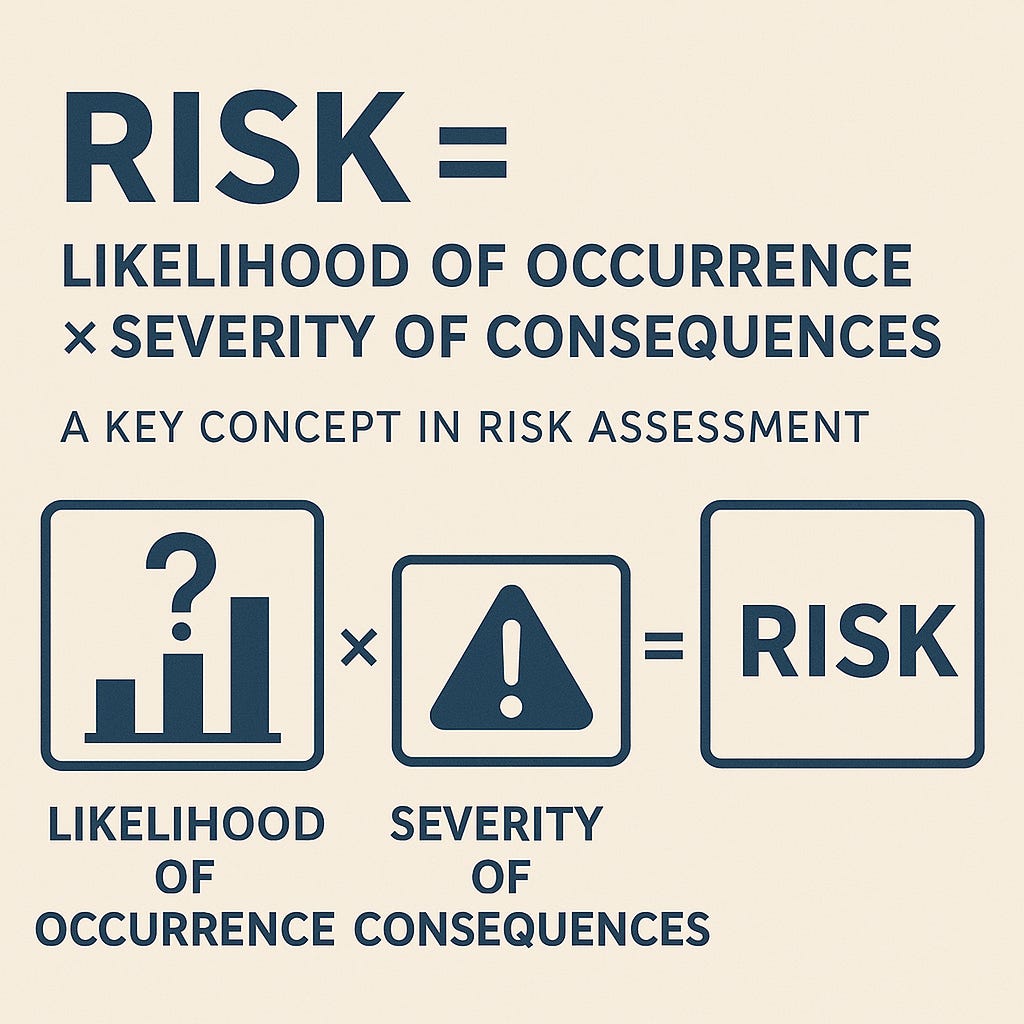
The better approach is to look at the whole system and find the changes that mitigate the most risk be it mitigating security controls, configuration changes, and yes, root-cause fixes. If attackers aren’t bothering with the flood of new code flaws, your effort belongs where they are spending their time… misconfigurations, social engineering and other attacks on humans, and authentication and authorization gaps. Fixing those often matters as much as patching code flaws, or more.
In practice, stop over-indexing on patching. When you can’t fix everything immediately, the goal should be to do the least level of effort that provides the highest level of risk reduction impact.
If a bandage stops the bleeding, you don’t send the patient into surgery. Keep an eye on the wound and add controls later as time permits, but when risk reduction is the goal, prioritize the actions that cut the most risk the fastest.
Follow the Money: Who Wins and Who Loses
So where do we go from here? What does this mean for security vendors, and how should enterprise security leaders build a stack around reducing risk?
Vulnerability discovery vendors: Vendors focused on finding more issues faster will get commoditized as the cost of discovering a vulnerability approaches zero. Security leaders should stop adding tools that find more issues and start buying technology that reduces risk the fastest.
Patch focused remediation technologies: Vendors offering ONLY root cause style patch creation and remediation products will struggle. Vendors and security leaders must execute a holistic remediation and mitigation strategy and put it into practice across the entire landscape at scale. Technologies that improve the speed and accuracy of this approach should be prioritized for purchase.
Solutions that measure risk grow in value: Tools that measure and reduce risk in a quantifiable way should drive future security budgets, and that money should come out of vulnerability discovery platforms.
Stop paying per finding or per asset secured: Both of these financial models fail to drive incentives towards the ultimate goal of risk reduction. Vendors that want to win in the AI era should charge for risk reduction work actually completed.
Can’t AI Just Code Better and Eliminate the Problem?
The most natural argument against my recommended approach is to just have the AI agents that write code do it securely in the first place. You might be thinking that we should be able to eliminate entire classes of vulnerabilities across all software, rather than apply superficial bandaids to issues resulting in hidden risk in our environment… and you wouldn’t be wrong.
But sit in the CISO’s chair for a second. That plan only works if every software vendor you rely on ships zero vulnerabilities. Will that happen? Absolutely not.
AI-written code is repeating human mistakes, just faster and at a scale we’ve never seen. The only way to keep up is to point AI at the entire environment and have it analyze, prioritize, and apply mitigations across the whole thing. The dream is AI-driven risk reduction that remediates fast enough to hold risk at acceptable levels.
Of course there is a trade off in this approach. By putting bandaids on top of each root issue we will build up a world of compensating control debt, and that debt grows every time we skip the root-cause fix. We’re buying time by reducing risk today while borrowing against tomorrow. The answer is to track that debt and burn it down as resources allow. As AI-driven remediation matures, we’ll be able to burn down entire flaw classes at scale. I do see a world where AI-driven automated patching becomes reality. I just don’t see it arriving fast enough to skip compensating controls in the meantime.
Three Decades of Find-the-Attack and Sell-the-Fix
For three decades the security industry has been finding more issues and publicizing them to create fear, uncertainty, and doubt in the eyes of product buyers. That practice (and the compliance requirements attached to it) drives security sales every day. Yet in 30+ years of doing this, we still haven’t definitively stopped security breaches. Things are only getting worse as AI drives the cost of finding issues lower and lower.
Here’s the sad part. I don’t think the buyers and security leaders are quite ready for this change. They have been programmed to eliminate vulnerabilities as quickly as possible and to strive for a zero vulnerability environment for their entire careers. Real risk reduction won’t take center stage until that culture changes at the foundation.
Continuous Threat Exposure Management (CTEM) vendors are starting to lean into this approach, and I’m hopeful we’ll see real risk reduction soon.
Stop counting vulnerabilities. Start counting the risk you’ve removed.
How this was made: The idea, the opinions, and the first draft are mine. I use AI as a research assistant and sparring partner: it helped gather and verify sources, shape the outline, argue against my thesis, and propose edits that I accepted or rejected. Every opinion here is mine, and so is every mistake.